
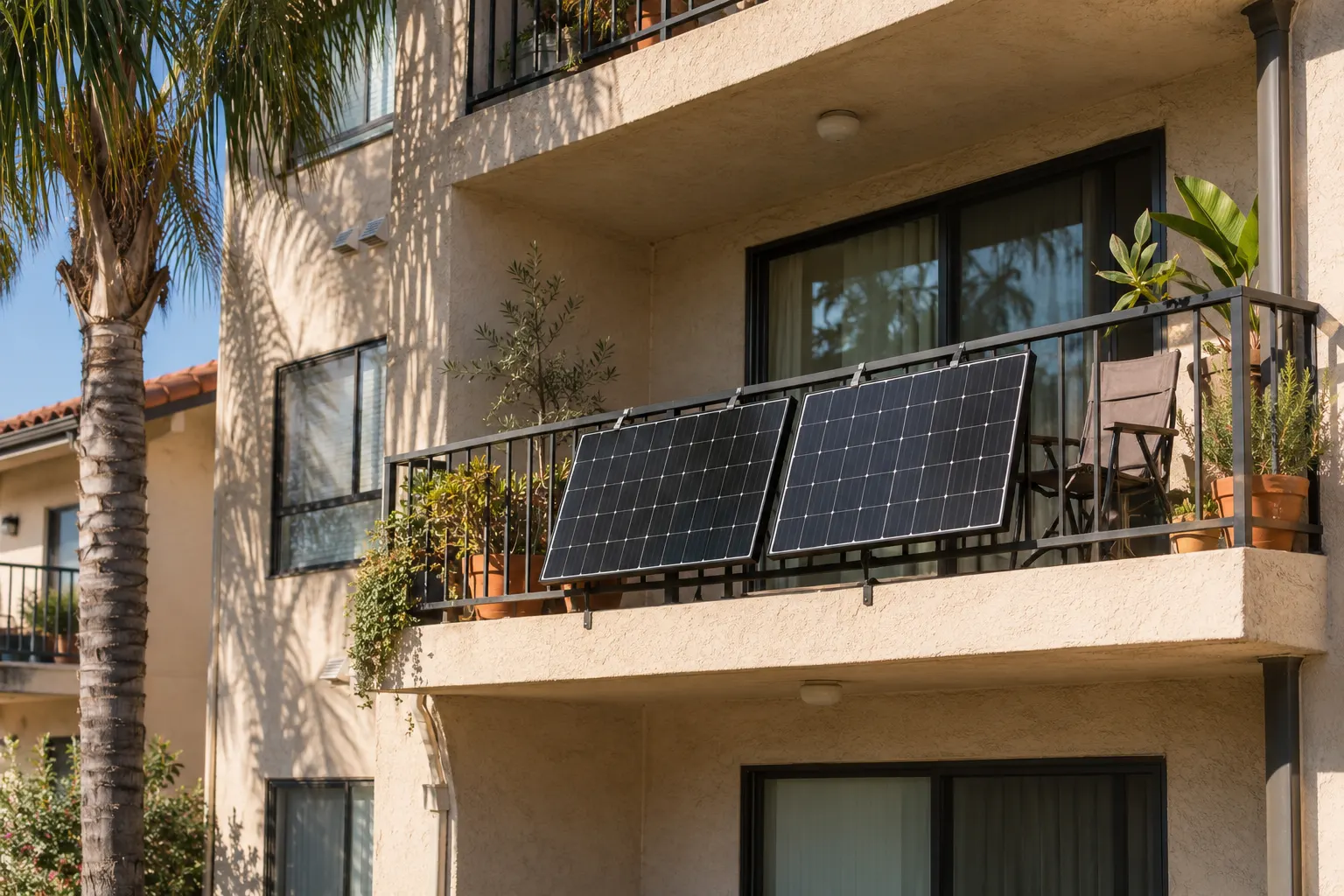
As of November 9, 2026, ten US states have signed a plug-in solar law: Utah, Maine, Virginia, Colorado, Maryland, New Hampshire, Connecticut, Vermont, New Jersey and California. Most cap output at 1,200 W, and Colorado allows up to 1,920 W. Colorado HB26-1007, 2026 Utah’s law, in force since May 7, 2025, is the oldest. Utah HB 340 (2025) Everywhere else there is no state law, which is not a ban: your utility’s interconnection process applies, and the National Electrical Code has no category for these kits yet. NFPA 70 proposed TIA 1951
What the State Laws Have in Common
Read the ten laws side by side and the same few ideas come back. The kit plugs into a standard 120 V outlet. The equipment must be certified by UL or another nationally recognized testing laboratory, and it must shut down when the grid goes down, so no power reaches a dead line. Utah HB 340 (2025) The laws exempt these kits from the normal interconnection process, and several keep them outside net metering, so the power you do not use as it is made earns nothing.
Where the laws differ is in the detail: whether you must tell your utility before you install, after, or not at all, and whether a landlord or HOA can say no. Only New Jersey, Vermont and Colorado wrote rules for tenants and associations into their laws.
If Your State Has No Law
No state law is not the same as a ban. We found no federal prohibition and no federal rule of its own. Without a state law, your utility’s interconnection process applies, which is our reading of how the new laws work, not something we checked utility by utility. Ask your utility before you plug in, and keep the answer in writing.
Start Here
Renters, Condos and HOAs
Tools and Kits
Sources
Each one opened and checked on November 9, 2026.